
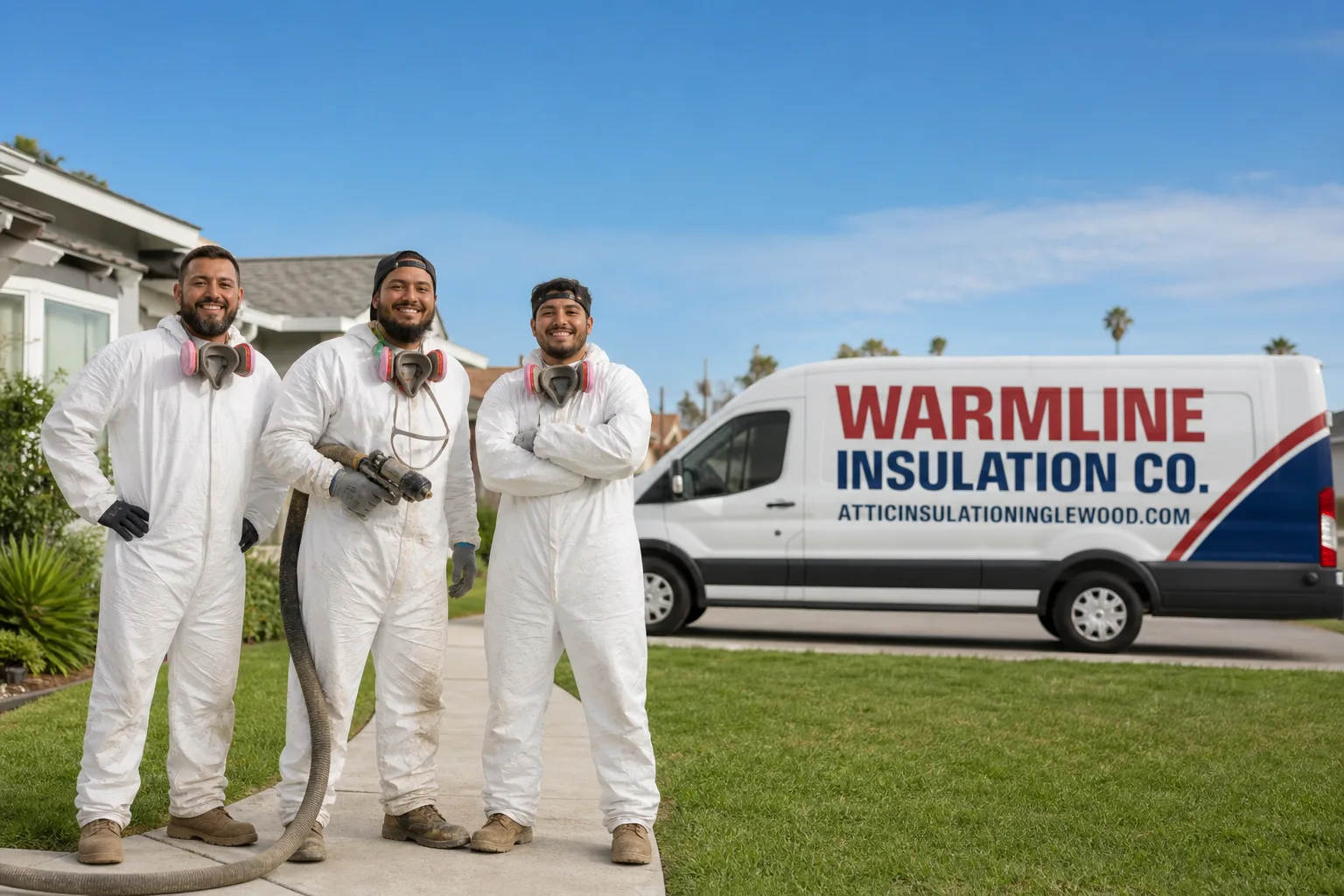
How Much Does a Home Energy Audit Cost in Inglewood?
A home energy audit in Inglewood, CA typically costs between $250 and $650 for a professional blower-door and thermal-imaging inspection of a single-family home. Most Inglewood homeowners pay around $350 to $450 for a full diagnostic that includes a written report and prioritized upgrade recommendations. Utility rebate programs through Southern California Edison and SoCalGas can reduce your out-of-pocket cost to zero on qualifying audits – more on that below.
Home Energy Audit Cost Breakdown (2026)
Here’s what you’re actually paying for when you book a Home Energy Audit in Inglewood. Prices below reflect the local market as of 2026, accounting for Southern California labor rates and the typical housing stock found in neighborhoods like Morningside Park, Centinela, and Lennox-adjacent areas.
| Audit Type / Component | Typical Cost Range (Inglewood) | Notes |
|---|---|---|
| Basic visual walkthrough (no equipment) | $75 – $150 | Limited diagnostic value; rarely recommended for older Inglewood homes |
| Standard blower-door test only | $175 – $275 | Measures air leakage rate (ACH50); good starting point |
| Full professional audit (blower door + thermal camera + written report) | $300 – $500 | The most common package booked by Inglewood homeowners |
| Full audit + HVAC combustion safety testing | $400 – $600 | Recommended for homes with gas furnaces or water heaters |
| Comprehensive whole-home performance audit (larger homes, 2,000+ sq ft) | $500 – $800 | Includes duct leakage testing, attic and crawl space inspection |
| Utility-sponsored or rebate-subsidized audit | $0 – $99 | Through SCE or SoCalGas qualifying programs; availability varies |
What Drives the Price Up or Down
The single biggest cost variable in Inglewood is home size. A 900-square-foot bungalow in the Morningside neighborhood takes about 90 minutes to audit properly. A 2,400-square-foot two-story in the Inglewood Park area can take three to four hours to do right. More time, more equipment setup, more report writing – the price reflects that.
Older construction is the other major driver. Inglewood’s housing stock skews heavily toward homes built between the 1940s and 1970s. Those houses were built before meaningful energy codes existed, which means an auditor finds more to document – uninsulated wall cavities, disconnected duct sections, attics with R-11 batts that have shifted or compressed over decades, and sometimes open balloon-framing cavities that channel air directly between floors. A more complex audit costs more because the write-up alone takes longer to prepare. That complexity is also exactly why a professional audit is worth every dollar here.
Add-ons like duct blaster testing, combustion safety analysis, and moisture mapping push costs toward the higher end. If you have a gas appliance in your Inglewood home – and most do – the combustion safety check is money well spent. Carbon monoxide risks are not theoretical in older SoCal housing stock.
What Affects Home Energy Audit Pricing in Inglewood
- Home square footage: Audit pricing in Inglewood generally scales with conditioned floor area. Expect to pay roughly $0.15 to $0.25 per square foot as a rough baseline, though the minimum visit fee applies regardless of size. A 1,200-square-foot home will typically land in the $300 to $450 range for a full diagnostic.
- Age and construction type of the home: Pre-1970 Inglewood homes – especially wood-frame construction common in neighborhoods like Darby-Dixon and Inglewood Park – tend to take longer to audit because air leakage pathways are more numerous and less obvious. Expect auditors to spend extra time in attic and wall cavity inspection on these properties.
- Duct system complexity: Many Inglewood homes have older ducting routed through unconditioned attics. Testing duct leakage with a duct blaster requires additional setup time and typically adds $75 to $150 to the audit cost. Given Inglewood’s warm climate, leaky attic ducts are one of the top culprits behind high cooling bills.
- Thermal imaging scope: A full infrared scan of all exterior walls, the attic floor, and the crawl space (if present) takes more passes and more analysis time than a partial scan. Some auditors offer a cheaper package that skips wall imaging – worth asking about, but also worth knowing what you’re giving up.
- Local climate factors: Inglewood sits close enough to the coast to experience the marine layer that rolls in most mornings from June through September. That persistent humidity creates moisture risks inside wall cavities and crawl spaces that an auditor needs to account for. Auditing for both thermal performance and moisture intrusion in the same visit is standard practice here – and it adds a small amount of time to the inspection.
- Auditor credentials and certification level: A BPI-certified Building Analyst commands higher rates than a contractor who offers audits as a loss-leader. The difference is real – BPI-certified auditors follow a defined protocol and their reports are required by most rebate programs. In the Inglewood market, expect certified auditors to price at the middle-to-upper end of the ranges above.
How to Save on a Home Energy Audit in Inglewood
Use Southern California Utility Rebate Programs
Southern California Edison’s Home Energy Efficiency Rebates and SoCalGas’s Energy Savings Assistance Program both cover or subsidize professional home energy audits for qualifying Inglewood customers. Income-qualified households can receive a fully subsidized audit at no cost. Even non-income-qualified customers sometimes access reduced-cost audits as part of a broader rebate package when they pair the audit with qualifying upgrades like insulation or HVAC. Check SCE’s rebate portal or call your utility before paying full price – the program availability changes, but as of 2026 these programs are active for LA County customers.
Bundle the Audit with Planned Upgrades
When you know you’ll be adding insulation, upgrading your HVAC, or sealing your attic anyway, many contractors (including us) roll the audit cost into the project or apply it as a credit toward the work. At Warmline Insulation Co., the Home Energy Audit in Inglewood is designed as a diagnostic starting point – the findings directly shape what we recommend for attic insulation, air sealing, and crawl space work, which means you’re not paying for a report that sits in a drawer.
Ask About the $89 Seasonal Tune-Up
Our $89 Seasonal Tune-Up includes an attic and insulation check that overlaps with parts of a standard energy audit. For homeowners who want a lower-cost first look before committing to a full diagnostic, this is a reasonable starting point. It won’t replace a blower-door test or thermal scan, but it will surface obvious issues like missing insulation, open penetrations, and inadequate attic ventilation.
Take the Senior and Veteran Discount
We apply a permanent 5% Senior and Veteran discount to every service, including home energy audits. Inglewood has a significant veteran community, and this discount never expires or requires re-enrollment. Mention it when you call and it’s applied immediately.
Get a Free Estimate First
Before you book anything, call us at (424) 622-5846. A live person answers 24/7 – not a voicemail, not an answering service – and we can give you a straight price range based on your home’s address, age, and size in about five minutes. Free estimates, no obligation. Most Inglewood homeowners find that knowing the exact number upfront removes the biggest reason people delay getting an audit done.
What a Home Energy Audit Actually Covers in an Inglewood Home
This is worth spelling out because the phrase “home energy audit” gets used loosely. What a real, professional audit includes – and what Warmline’s approach covers – is meaningfully different from a contractor walking through your home and eyeballing the attic.
Blower-Door Pressurization Test
A large calibrated fan is temporarily mounted in an exterior doorframe and depressurizes the home to a standard pressure (50 Pascals). The equipment measures exactly how much air the house is losing per hour – a number called ACH50. Inglewood homes from the 1950s and 60s commonly test at 8 to 14 ACH50; a well-sealed modern home targets 3 or below. That number tells us where to focus air sealing resources and predicts how much the heating and cooling load will drop after treatment.
This test involves depressurizing your home to levels that can affect gas appliances – particularly older atmospheric-vented furnaces and water heaters. A competent auditor will perform combustion appliance zone testing before and during the blower-door test to confirm there’s no backdrafting risk. Don’t let anyone skip this step on a home with gas equipment.
Thermal Imaging Scan
An infrared camera reads surface temperature differences across walls, ceilings, and floors. Where insulation is missing or has shifted, the thermal gradient changes – and the camera shows it clearly. In Inglewood homes with original blown-in insulation from the 1970s, we regularly find large settled areas in attic floors that look fine from above but show up as clear cold zones on a thermal scan during a cool morning. The marine-layer mornings that are common here from June through August actually create ideal outdoor-to-indoor temperature differentials for thermal imaging – one practical advantage of auditing during that season.
Duct Leakage Testing
In Inglewood, where summer cooling costs dominate annual energy bills, duct leakage testing is one of the highest-value components of any audit. A duct blaster pressurizes the duct system independently and measures leakage. Many Inglewood homes have duct systems that leak 25% to 35% of conditioned air into an unconditioned attic – air you paid to cool that ends up heating the attic instead of the rooms you’re sitting in.
Written Report with Prioritized Recommendations
A professional audit concludes with a written report that ranks findings by cost-effectiveness – the improvements with the fastest payback come first. This matters because Inglewood homeowners typically have a real budget to work with, and a good audit helps you spend that budget where it produces the most bill reduction per dollar. Vague recommendations like “consider adding insulation” aren’t useful. A proper report tells you which zones, what R-value target, and roughly what you should expect to spend and save.
Home Energy Audit vs. DIY Energy Assessment: What’s the Difference?
Utility companies and various apps offer online “home energy assessments” that ask you questions about your square footage, insulation type, and appliances. These produce a ballpark estimate of your energy use profile – nothing more. They don’t measure air leakage, can’t detect missing insulation inside wall cavities, and can’t identify combustion safety risks. For a 1965 Inglewood home with original ductwork, an online questionnaire will miss most of what’s actually driving your bills.
A professional audit produces measured data, not estimates based on your answers to questions. That distinction matters when you’re deciding whether to spend $4,000 on new insulation or $6,500 on attic air sealing and insulation combined. The audit tells you which investment makes sense for your specific home – the DIY checklist cannot.
Home Energy Audit ROI in Inglewood: Real Numbers
The building science research on this is consistent: a professionally audited and properly weatherized home reduces heating and cooling energy use by 15% to 30% on average. For an Inglewood home with a $180 average monthly utility bill (a reasonable middle estimate for a 1,400-square-foot home with central AC in a normal year), that translates to $324 to $648 per year in savings after recommended improvements are made.
A $400 audit that points you toward $2,500 in attic insulation and air sealing work – work that saves you $500 per year – pays for itself in under six months of the upgrade’s payback period. The audit cost is essentially free at that math.
Inglewood’s climate makes the ROI case particularly strong. The city sits in a transitional zone between the marine influence near LAX and the warmer inland temperatures toward the 405. Homes on the eastern side of Inglewood, near Century Boulevard and Prairie Avenue, regularly hit summer attic temperatures above 140°F – even when outdoor temps are in the mid-80s. That radiant heat load drives AC runtime and cost. A radiant barrier or upgraded attic insulation, identified and sized correctly through an audit, can cut that attic temperature by 20 to 30 degrees and meaningfully reduce cooling load.
Why Inglewood Homes Need Energy Audits More Than Most
Inglewood’s housing stock is one of the oldest in Los Angeles County on average. The city saw its primary residential build-out from the 1940s through the early 1970s, well before California’s Title 24 energy code existed (Title 24 Part 6 didn’t take effect until 1978). That means the overwhelming majority of Inglewood’s single-family homes were built with zero insulation requirements, minimal air sealing, and duct systems designed when electricity cost a fraction of today’s rates.
The neighborhoods around Inglewood Park Cemetery, Morningside Heights, and the flats north of Century Boulevard are particularly dense with this vintage of construction. We’ve audited homes in those areas where the attic had original kraft-faced fiberglass batts from the early 1960s – R-7 to R-11 at best, compressed further by decades of settling – against a California Energy Commission recommendation of R-38 to R-60 for this climate zone. That gap is substantial, and it shows up on energy bills every month.
The other Inglewood-specific factor is the prevalence of raised-foundation homes with dirt crawl spaces. Crawl space moisture in Inglewood’s marine-influenced climate creates real problems – mold, wood deterioration, pest activity, and comfort issues on ground-floor rooms. An energy audit that includes crawl space inspection identifies these problems before they become structural. See our home services page for the full range of what we cover in a single visit, including crawl space encapsulation and vapor barrier installation.
What Happens After the Audit
The audit is the diagnosis. The upgrade work is the treatment. At Warmline, we perform both under one contractor, which means the auditor who identifies a problem is connected directly to the crew that fixes it. There’s no interpretation gap between “the audit said we need air sealing” and “the insulation contractor guessing where to seal.” The findings translate directly into a scoped project.
The most common upgrade sequence we see after an Inglewood home energy audit:
- Attic air sealing – closing penetrations at top plates, recessed lights, and HVAC boots before adding insulation. Skipping this step first makes adding insulation only partly effective.
- Attic insulation upgrade – most Inglewood homes end up with blown-in Owens Corning or Knauf product brought up to R-38 or R-49, depending on the home’s existing conditions and the recommendations from the audit report.
- Duct sealing or replacement – for homes with measured duct leakage above 15%, sealing or replacing duct connections typically delivers noticeable bill reduction quickly.
- Crawl space vapor barrier or encapsulation – for raised-foundation Inglewood homes, addressing moisture below the home protects the structure and improves comfort on the first floor.
- Radiant barrier installation – particularly effective in Inglewood’s higher-heat eastern corridors, where attic radiant load is severe in summer.
Every one of these upgrades is backed by our 90-Day Done Right Promise. If anything we install isn’t performing as specified, we make it right. That’s a written commitment, and it’s rare in this industry.
FAQs – Home Energy Audit Cost in Inglewood
How much does a home energy audit cost in Inglewood, CA?
A professional home energy audit in Inglewood costs between $250 and $650 for most single-family homes, with the majority of jobs falling in the $350 to $450 range. The price depends on home size, age, and which diagnostic tests are included – blower-door testing, thermal imaging, duct leakage testing, and combustion safety checks each add time and cost. Utility rebates through SCE and SoCalGas may reduce or eliminate your cost if you qualify. Call (424) 622-5846 for a free estimate based on your specific home.
Is a home energy audit worth it for an older Inglewood home?
Yes – and Inglewood’s pre-1970 housing stock is exactly where an audit delivers the highest return. Homes built before California’s Title 24 energy code have no mandated insulation, no air sealing requirements, and duct systems designed for a different era of energy pricing. An audit on a 1960s Inglewood home routinely surfaces $1,500 to $5,000 worth of bill-reducing improvements that a homeowner would never have prioritized correctly without measured data. The $300 to $450 audit cost is a small fraction of the savings potential.
Can I get a free home energy audit in Inglewood?
Possibly – through utility programs. Southern California Edison and SoCalGas both offer subsidized or fully covered home energy audits for qualifying customers in Inglewood. Income-qualified households can often access a no-cost audit and follow-up upgrades through the Energy Savings Assistance Program. Non-income-qualified customers sometimes access discounted audits as part of a rebate bundle when pairing the audit with qualifying insulation or HVAC work. Call (424) 622-5846 and we’ll help you understand which programs apply to your address before you spend anything out of pocket.
How long does a home energy audit take in Inglewood?
Most professional audits in Inglewood take between 2 and 4 hours on-site. A straightforward 1,000-square-foot bungalow with simple HVAC can be done in under 2 hours. A 2,000-plus square-foot two-story with a crawl space, complex duct system, and gas appliances that require combustion safety testing typically takes 3 to 4 hours. The written report is usually delivered within 24 to 48 hours of the inspection. We aim to complete most work in a single visit, and audits are no exception.
What’s the difference between a home energy audit and a home inspection?
A home inspection looks at the structural and mechanical condition of a home – foundation, roof, plumbing, electrical – with a focus on defects and code compliance. A home energy audit looks specifically at how the home performs thermally: where it loses conditioned air, how efficient the insulation is, how much the duct system leaks, and what the actual measured air leakage rate is. The two assessments address different questions. For an Inglewood homeowner focused on high bills and uneven comfort, the energy audit is the relevant diagnostic. For a buyer assessing the structural condition of a home, a home inspection is what they need. The two complement each other and neither replaces the other.
About Warmline Insulation Co.
Neil Ashford leads Warmline Insulation Co., which has been serving Inglewood and the surrounding South Bay and LA communities since 2011 – more than 15 years of building-science work in Southern California’s specific climate. We’re licensed and insured, every technician is background-checked and arrives in uniform, and pricing is upfront with no surprises at the end of the job.
We handle ten categories of insulation and home-performance work under one roof – from home energy audits and attic air sealing to crawl space encapsulation and radiant barrier installation. That matters because a diagnosis we write becomes a project we manage. There’s no handoff to a separate contractor, no translation loss between findings and fixes. Neil built this company around the idea that Inglewood homeowners deserve a specialist who treats insulation as the foundation of a healthy home, not an afterthought.
All work is backed by our 90-Day Done Right Promise. If it’s not done right, we make it right. And when you call (424) 622-5846, a live person picks up – any time of day or night, no voicemail.
Key Takeaways
- Home energy audits in Inglewood typically cost $250 to $650, with most homeowners paying $350 to $450 for a full diagnostic.
- Utility rebates through SCE and SoCalGas can reduce the cost significantly – sometimes to $0 for qualifying households.
- Inglewood’s older housing stock (primarily 1940s-1970s construction) makes professional audits especially valuable – these homes have the most to gain from measured upgrades.
- A full audit includes blower-door testing, thermal imaging, duct leakage measurement, and a written prioritized report – not just a visual walkthrough.
- Warmline Insulation Co. offers free estimates, a 5% Senior and Veteran discount, and backs all work with the 90-Day Done Right Promise.
- Bundling your audit with insulation or air sealing work often reduces the effective audit cost through credit programs or contractor package pricing.
Schedule Your Home Energy Audit in Inglewood
If your energy bills feel high or certain rooms never quite reach the right temperature, a home energy audit is the measured first step – not a guess, not a sales pitch, but actual data about what’s happening inside your home’s walls and attic. Neil Ashford and the Warmline team have been running these diagnostics in Inglewood since 2011, and we know what to expect in homes of every age and construction type across this city.
Call (424) 622-5846 today. A live person will pick up, give you a straight estimate, and schedule a time that works for you. Free estimates, no obligation, upfront pricing from the start.
Pricing reflects the Inglewood, CA market as of 2026. Warmline Insulation Co. offers free estimates – call (424) 622-5846.
Written by Neil Ashford, Owner at Warmline Insulation Co., serving Inglewood, CA since 2011.
What Our Customers Say
"The estimate had every line itemized - removal, sealing, baffles, the blown-in by the bag - and the final invoice matched it exactly. Two other companies quoted a single number and could not tell me what R-value they were installing."
- Priya Raman"Crawl space smelled musty and the floors were cold. Full encapsulation with the thick liner taped at every seam, and a dehumidifier sized for the space. The hygrometer they left reads 48 percent now instead of the 70s."
- Elena Vasquez"Injection foam in the walls of our 1950s house - no drywall demolition, just small holes patched and painted the same day. The street noise in the front bedroom is half what it was."
- Yasmin Farah