
Trusted Blown-In Insulation for Inglewood Homeowners
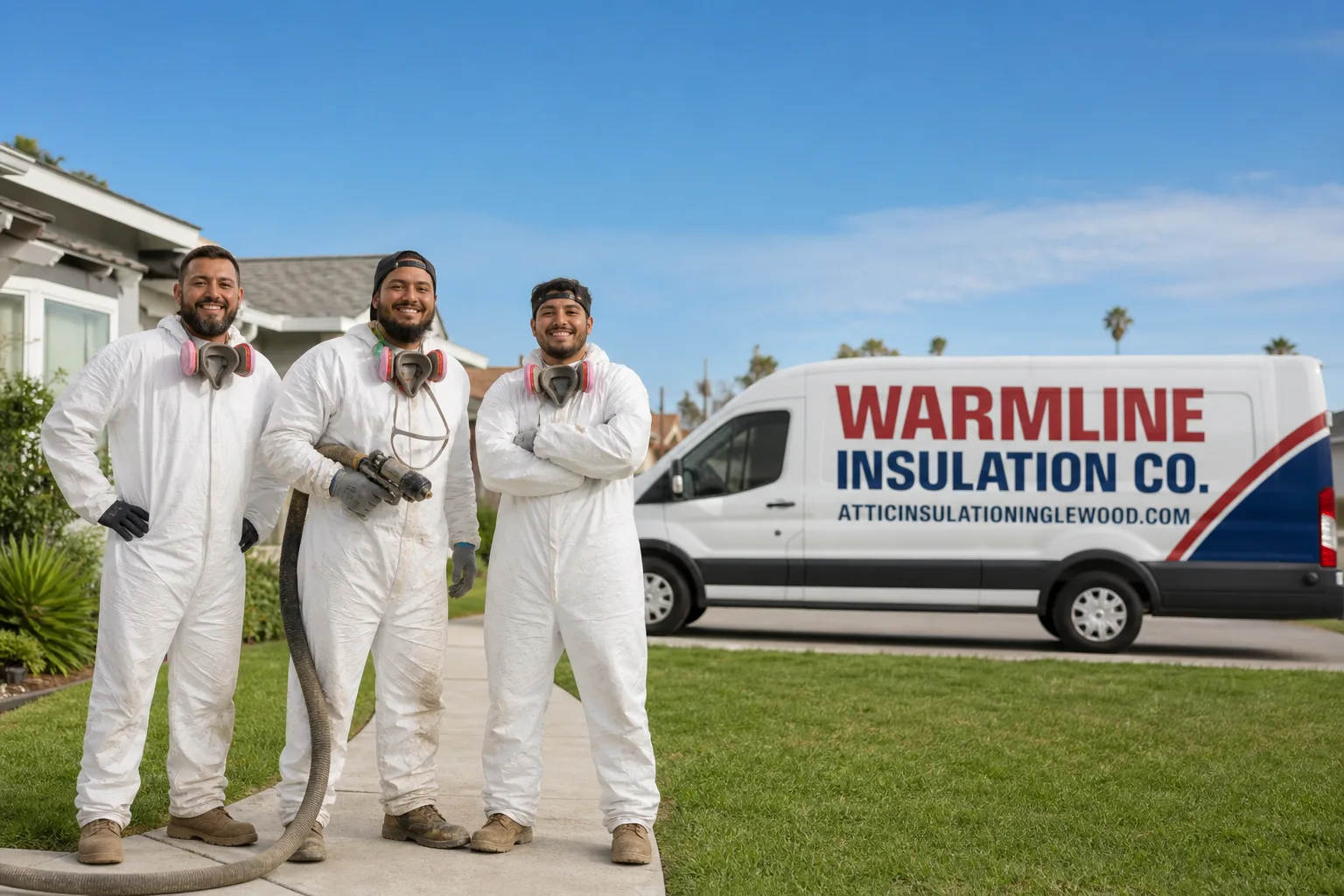
In Inglewood, where summer heat settles over the flatlands and coastal marine layers move through in the evenings, attic temperatures can easily swing from 140°F at 3 p.m. to the low 60s by midnight. That daily thermal cycle is exactly why Inglewood Blown-In Insulation matters here. It fills the irregular gaps, odd joist spacing, and tight soffit corners that older Inglewood homes are known for, places where fiberglass batts simply can’t conform. Warmline Insulation Co. has been installing and topping up blown-in insulation across Inglewood since 2011, and most jobs are done in a single visit. Our background-checked, uniformed technicians arrive with the right equipment and a clear plan. If your energy bills have crept up or certain rooms never seem to hold temperature, call (424) 622-5846. A live person answers, day or night.
What Our Blown-In Insulation Service Includes
Blown-in insulation works because it gets into the places other materials can’t. Loose material is pneumatically blown into attic floors, wall cavities, and hard-to-reach corners, creating a continuous thermal blanket without the gaps and seams that come with batts. Here’s what we do under each sub-service.
Blown-In Cellulose
Blown-in cellulose is made from recycled paper treated with fire-retardant borates, and it’s one of the most effective options for retrofitting Inglewood homes built before modern insulation standards. Because it’s dense and fibrous, cellulose settles into corners, around recessed lights, and over irregular framing far better than batts. We use GreenFiber and CertainTeed cellulose products, which we’ve installed in hundreds of attics from Morningside Park to the streets north of Century Boulevard. We calculate the exact depth needed to hit your target R-value, then blow the material to a consistent, verified depth across the entire attic floor, including the hard-to-reach perimeter.
Cellulose is particularly good for Inglewood homes with older framing because it fills around obstacles without leaving thermal gaps. If rodents or pests have compromised existing insulation, we can remove and replace it, then blow in fresh cellulose the same day.
Blown-In Fiberglass
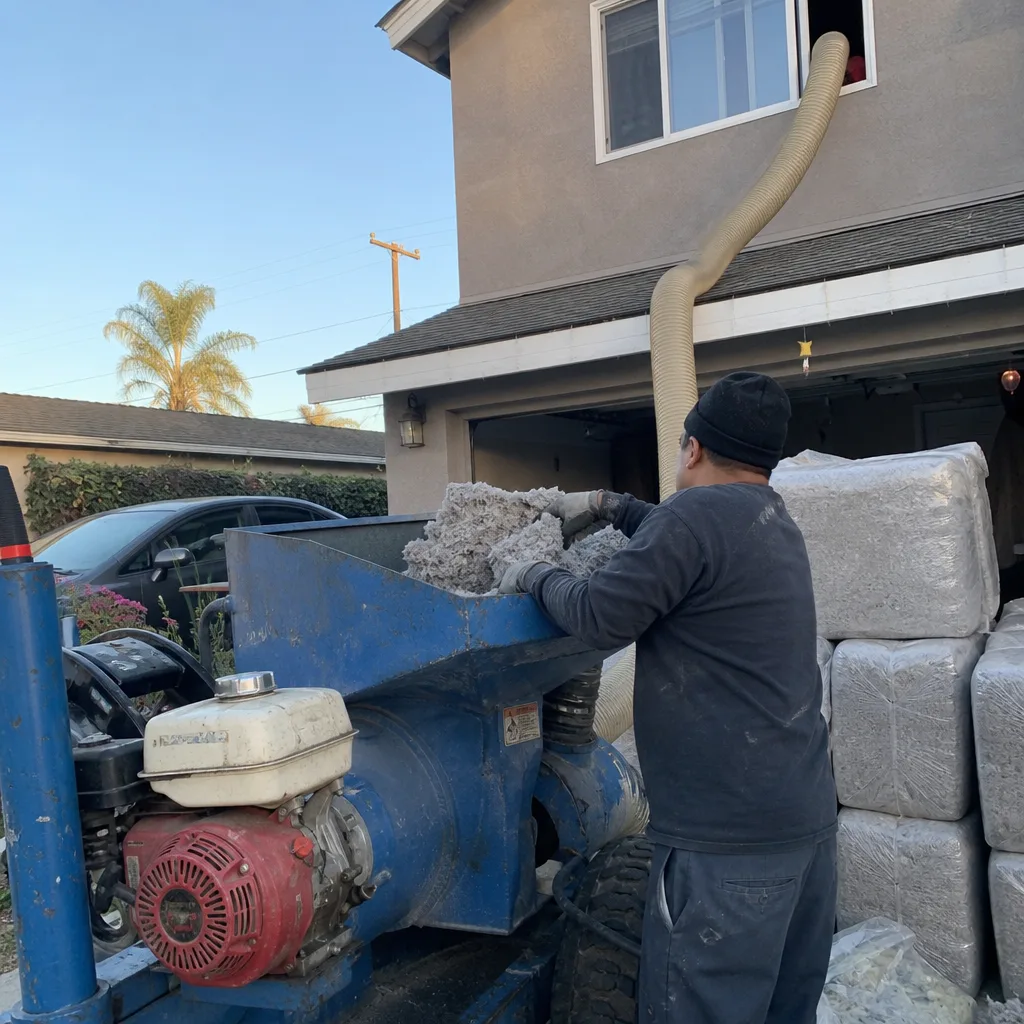
Blown-in fiberglass uses loose glass fibers that are blown into attics or wall cavities, creating a fluffy, airy insulation layer that resists moisture and settling over time. We work primarily with Owens Corning and Knauf blown fiberglass, materials that are non-combustible and won’t support mold growth. If you have an open attic with accessible joists, fiberglass is often the fastest and cleanest option, because it spreads evenly and stays put.
For Inglewood homes with flat or low-slope roofs (common in the neighborhoods east of La Brea and south of Florence), blown-in fiberglass can be applied in thinner but more consistent layers, which matters when attic clearance is tight. We also offer our Blown-In Insulation in Hawthorne for homes with similar roof profiles just to the south. We check depth throughout the space, not just at the access point, because “fluff and run” contractors often leave corners thin. That’s a mistake you pay for in summer.
Dense-Pack Wall Insulation
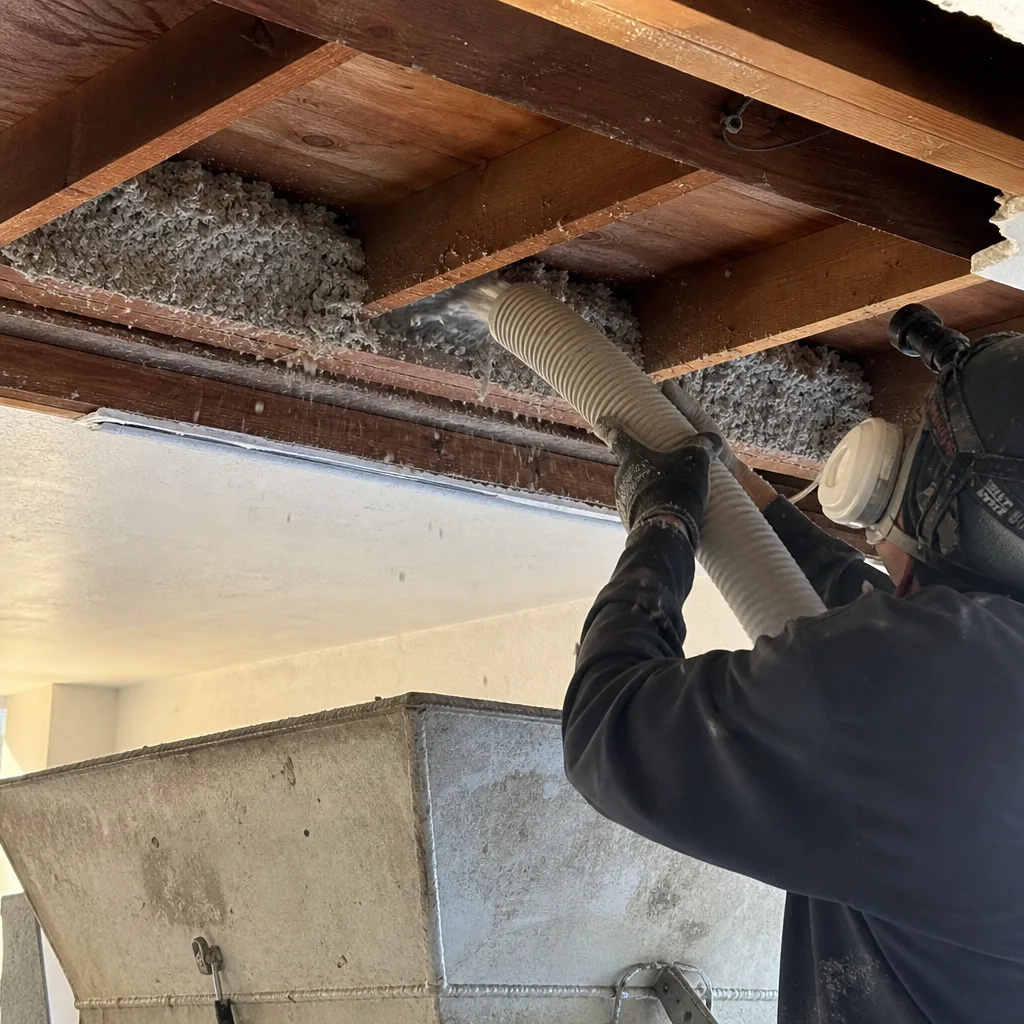
Dense-pack is a specialized technique where cellulose is blown into enclosed wall cavities at high pressure, filling them completely from top to bottom. This is the right solution for Inglewood homes with uninsulated walls, which are common in homes built before 1980. The city has thousands of stucco and wood-siding homes with empty wall cavities. Those walls transfer heat all day, making your air conditioner work harder than it should.
For dense-pack work, we drill small access holes, blow the cellulose to a calibrated density (usually around 3.5 pounds per cubic foot), then patch the holes cleanly. The result is a wall that finally acts like a thermal barrier, not a heat sponge. We’ve done this on homes across Inglewood, from the tree-lined streets of North Inglewood to the commercial-adjacent blocks near the Forum, and on Blown-In Insulation - Culver City projects to the west. The technique requires careful pressure control, which is exactly the kind of experience our crews bring after more than a decade of wall work.
Blown-In Top-Up
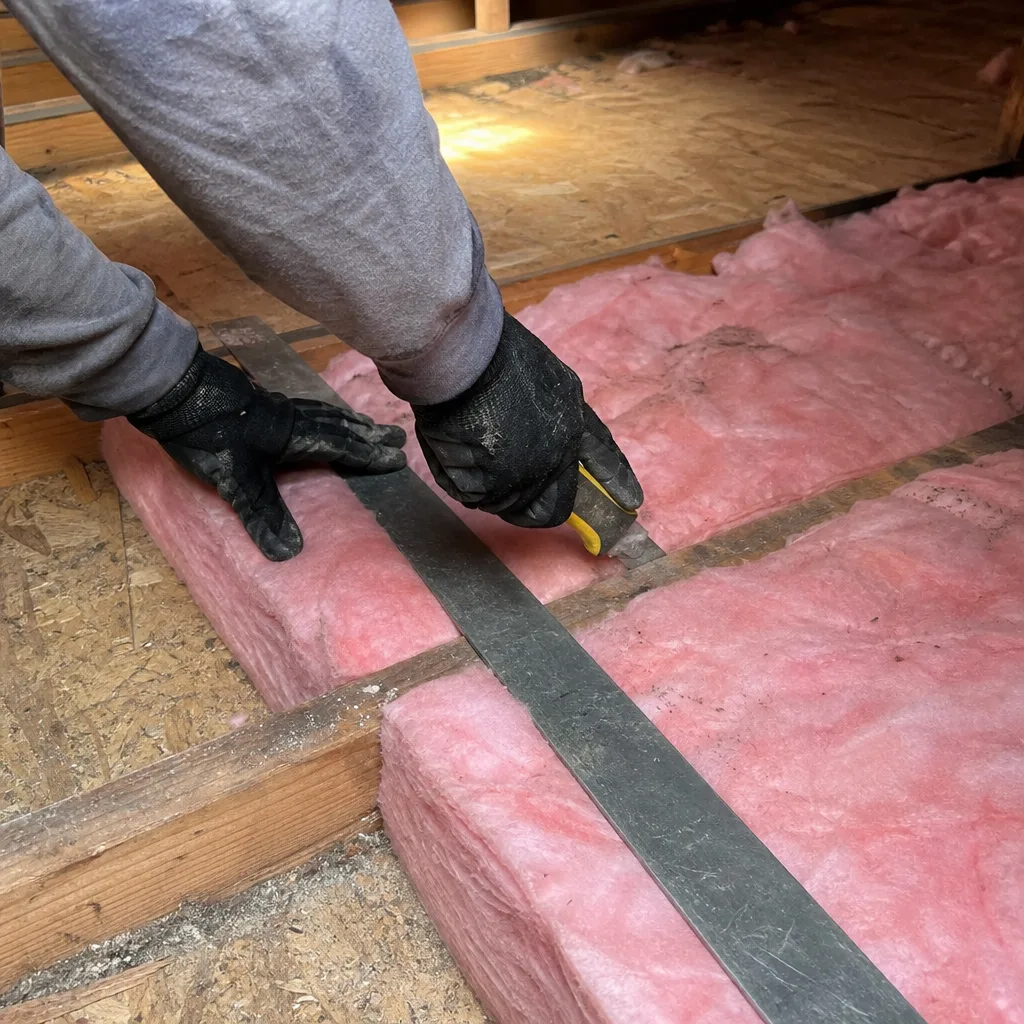
If your attic already has insulation but it’s thin, settled, or just not hitting the recommended R-value, a top-up is the most cost-effective move. We inspect what’s already up there, identify any problem spots, and blow a fresh layer on top to bring the total depth up to code recommendations for the Inglewood climate zone. This is often done in under two hours for a typical single-story home.
A top-up is also the right call if you’ve had a partial removal due to pest damage or water intrusion. Rather than tearing everything out, we’ll remove the damaged section and blow in matching material to restore full coverage. This saves money and keeps your home comfortable without weeks of disruption.
What happens when you call
- 1
A real person answersNo phone trees - you reach a local pro.
- 2
You get an upfront price rangeHonest numbers before anyone is dispatched.
- 3
A background-checked tech heads outLicensed & insured, dispatched right away.
- 4
You approve before work beginsNothing starts until you say go.
Brands We Service for Blown-In Insulation
We install and service blown-in insulation from Owens Corning, GreenFiber, and CertainTeed. Each brand has its strengths. Owens Corning blown fiberglass, for example, has excellent thermal consistency and settles very little over time. We’ve installed it in hundreds of Inglewood attics and know exactly how it performs in this climate, including how much depth you actually need to hit R-38 to R-60 in our zone.
GreenFiber and CertainTeed cellulose are our go-to options for dense-pack wall applications and for attics with lots of framing obstacles. These materials include borate treatment that resists pests and mold, which matters in Inglewood where older homes often have roof leaks and rodent history. If you already have one of these brands in your home and need a top-up, we’ll match the existing material so the blend is seamless. Whatever brand is in your attic now, we can assess it, recommend the right next step, and get the work done without drama.
Signs You Need Blown-In Insulation Right Now
- Your upstairs or back rooms are always hotter than the rest of the house. In Inglewood’s summer, an attic with thin insulation becomes a radiant heat panel over your ceilings. If certain rooms run 5-10°F warmer than the thermostat setting, your attic insulation is likely failing. Blown-in fills the gaps that cause those hot spots.
- Energy bills keep rising even though your usage hasn’t changed. Southern California Edison rates have climbed steadily, and poor attic insulation amplifies every dollar you spend on cooling. We regularly find attics in Inglewood with R-19 insulation where R-49 is recommended for our climate zone. That gap shows up on your bill every month from June through October.
- You can see the top of the joists in your attic. If the insulation in your attic doesn’t fully cover the floor joists, it’s not doing its job. The joists themselves are thermal bridges that conduct heat straight into your living spaces. A proper blown-in layer should bury those joists completely.
- Your home has drafty rooms in winter. Inglewood winter nights can drop into the 40s, especially in December and January. If you feel cold air moving through the house even with windows closed, you’re losing heat through the attic and possibly through uninsulated walls. Blown-in insulation stops that stack effect where warm air escapes upward.
- You’ve had pests or roof leaks. Rats, mice, and squirrels love to nest in old fiberglass batts. Once they’ve been through, the insulation is compressed, contaminated, and ineffective. If you’ve had a rodent issue or a leak that soaked your attic insulation, it’s time to remove the damaged material and blow in fresh insulation rather than just layering over the problem.
Our Blown-In Insulation Process - Step by Step
- 1
Attic assessment and air leakage check. Before we blow anything in, we inspect the attic space, measure current insulation depth, and look for air leaks. We check around recessed lights, plumbing vents, chimney chases, and the attic hatch. Air sealing is often the missing piece; it’s why we recommend an attic air sealing pass as part of the job, not after it.
- 2
Clear, prep, and protect the work area. We lay down floor protection from the entry point to the attic access, set up our hose runs carefully, and cover anything stored near the work zone. Existing insulation that’s damaged gets sucked out with a commercial vacuum before we bring in new material. Our technicians wear full PPE, including respirators, because we take airborne fiber and dust seriously.
- 3
Blow in the insulation to spec. We set the blower to the correct pressure for the material (lower for fiberglass, higher for cellulose dense-pack) and work in a systematic grid. We blow to a measured depth, not by eyeball, using marked depth gauges throughout the attic. This is one of the places where cheap contractors cut corners, and our 90-Day Done Right Promise specifically covers insulation depth consistency.
- 4
Verify coverage and depth. After blowing, we walk the attic (or use an inspection camera where space is tight) and confirm depth in multiple locations, including the far corners and soffit areas. If anything is below spec, we add material before we put the tools away. No “we’ll come back later” business.
- 5
Cleanup and final walkthrough. We remove all debris, vacuum the access area, replace the attic hatch, and do a final visual check of the work zone. You see the before and after photos out of our inspection camera. We explain what we did, what we found, and what depth/R-value you now have. Then we leave your home exactly as we found it, minus the heat problem.
How Much Does Blown-In Insulation Cost in Inglewood?
For a typical 1,500-square-foot single-story home in Inglewood, a full attic blow-in to R-49 with fiberglass or cellulose typically runs between $1,800 and $3,200. A top-up over existing insulation (bringing an R-19 attic up to R-49) usually lands between $900 and $1,600. Dense-pack wall insulation is a different job entirely, because it requires drilling and patching access holes; for a standard two-bedroom stucco home, budget roughly $3,500 to $6,500 depending on wall count and accessibility. These are the ranges we quote most often in Inglewood, including in the neighborhoods around Darby Park, Rogers Park, and the streets off Centinela. For more detail, see our Blown-In Insulation pricing guide.
What moves the price: total square footage, current insulation condition (removal costs more than a fresh blow-in), attic accessibility, and whether we’re also doing air sealing in the same visit. What’s included in our free estimate: a full attic inspection, depth measurement, leakage check, and a line-item quote so you know exactly what you’re paying for before any work happens. There’s no pressure and no hidden add-on fee. Call (424) 622-5846 to schedule one. Estimates are free, and a live person answers around the clock.
Blown-In Insulation Near Inglewood - Our Service Area
Warmline Insulation Co. is based in the South Bay and serves Inglewood and the surrounding communities from Hawthorne and Gardena to El Segundo, Lawndale, and Ladera Heights. We also work regularly in Culver City and Beverly Hills, where we provide blown-in insulation services for Culver City homes and blown-in insulation for Beverly Hills properties. For most Inglewood addresses, we can schedule an in-home assessment within 48 hours, and most insulation jobs are completed in one visit. If you’re outside Inglewood but nearby, call us, we’ll let you know when we can be there.
Serving Inglewood, CA - Our Local Coverage Area
We’re based in the Inglewood area and know this community well. Use the map below to see our service coverage - if you’re nearby, we can almost certainly help.
Frequently Asked Questions - Blown-In Insulation in Inglewood
Blown-in insulation is loose-fill material (fiberglass or cellulose) that’s pneumatically blown into attic floors or wall cavities to create a continuous thermal layer. It fills gaps, corners, and irregular spaces much better than fiberglass batts, which is why it’s the preferred method for retrofitting older Inglewood homes. The material is installed to a measured depth to hit a specific R-value, and it can be added on top of existing insulation as a top-up. Our crews use commercial blowers to ensure even distribution and consistent depth.
For a typical Inglewood attic, a full blown-in job takes between 2 and 4 hours including setup, blowing, depth verification, and cleanup. Dense-pack wall insulation takes longer, usually a full day, because of the drilling, patching, and precision pressure control involved. Most projects are completed in a single visit, which we confirm before scheduling. If you need removal of old or damaged insulation first, that adds roughly 1 to 2 hours depending on attic size.
A full attic blow-in for a 1,500-square-foot home typically runs $1,800 to $3,200, while a top-up is usually $900 to $1,600. Dense-pack wall work ranges from about $3,500 to $6,500 for a standard two-bedroom home. The best way to get an exact number is a free in-home assessment: we measure, inspect, and hand you a written quote with no obligation. Call (424) 622-5846 and we’ll have a technician out to you fast.
Yes, we install and top up all three brands, plus Knauf blown fiberglass. We’ve worked with Owens Corning and GreenFiber materials for many years and know their densities, settling rates, and coverage patterns well. If you have a specific brand already in your attic, tell us during the estimate and we’ll match it so the new material bonds properly with the old.
For emergency situations, like a sudden roof leak that soaked your attic insulation, we can often get a crew to your home the same day. Routine installations are typically scheduled within 48 hours. Call (424) 622-5846; a live person answers 24/7 and will give you an honest answer about today’s availability, no call centers, no waiting on hold.
All our blown-in insulation work is covered by our 90-Day Done Right Promise: if it’s not done right, we make it right, no charge and no argument. The insulation materials themselves also carry manufacturer warranties from brands like Owens Corning and GreenFiber. If something isn’t performing the way it should, we want to know about it immediately.
You don’t need to do much. We ask that you clear access to the attic hatch or pull-down ladder, and move any valuables stored directly below the access point. Our technicians bring their own floor protection, lighting, and tools, and they’ll handle everything from setup to cleanup. If you have items stored in the attic, we’ll confirm what needs to be shifted before we begin.
Schedule Your Blown-In Insulation Service in Inglewood Today
If your Inglewood home is losing cool air all summer and you’re tired of paying for comfort you don’t feel, blown-in insulation is the fix. Call (424) 622-5846 for a free, no-obligation estimate. A live person answers 24/7. We’ll schedule your assessment, show up on time, and give you a straight answer about what your attic needs. We’ve been doing this in Inglewood since 2011, and we back every job with our 90-Day Done Right Promise.
Written by Neil Ashford, Owner at Warmline Insulation Co., serving Inglewood since 2011.