
Owens Corning Attic Insulation: The Inglewood Owner’s Guide
Owens Corning attic insulation replacement in Inglewood typically runs $1.65 to $3.80 per square foot installed, depending on whether you’re topping off existing fiberglass batts or removing old material and starting fresh. We stock Owens Corning EcoTouch and AttiCat blown-in fiberglass on our trucks, so most Inglewood jobs are done in a single visit. What usually brings homeowners to this page is the realization that their attic insulation stopped doing its job years ago: rooms that won’t hold temperature, a second floor that’s ten degrees hotter than the first, or an energy bill that climbs every summer while the AC runs nonstop.
Which Owens Corning Models This Applies To
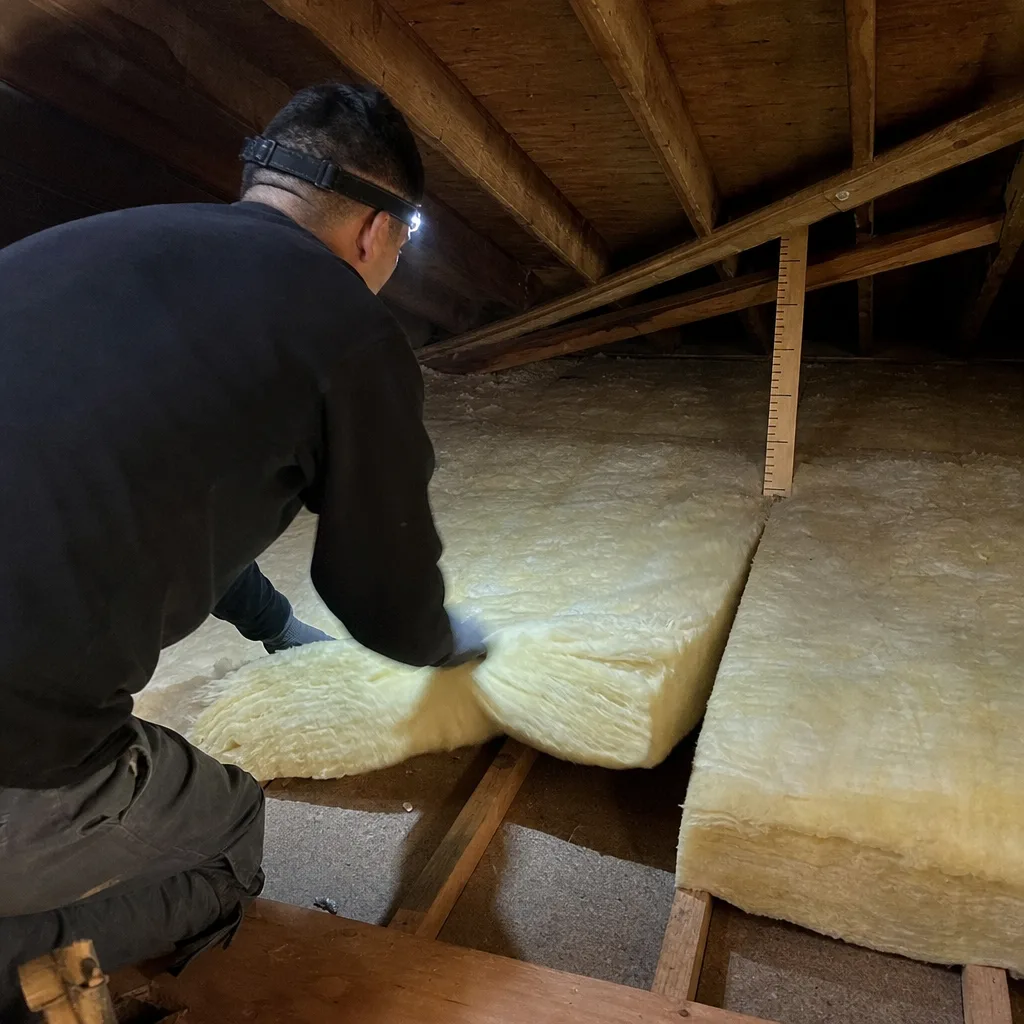
The two Owens Corning attic insulation products we install most often in Inglewood are EcoTouch batts (available in R-30 and R-38 for standard 2×10 and 2×12 attic joists) and AttiCat blown-in fiberglass, which covers irregular or hard-to-reach attic floors. If you’re checking what you have, look for the pink facing on the batts or the AttiCat bag sticker on the attic floor near the access hatch. One compatibility gotcha that catches a lot of Inglewood homeowners: older Owens Corning R-19 batts were sometimes laid in 2×6 ceiling joists in homes built before 1980. Those joists can’t hold enough depth for current Title 24 minimums, so replacing means either sistering the joists or switching to dense-packed blown-in fiberglass to hit R-38. We’re an independent contractor, not affiliated with Owens Corning directly, but we’ve installed their products for years because the density and loft hold up better in coastal humidity than most aftermarket equivalents.
Signs Your Owens Corning Attic Insulation Is Failing
- Upstairs rooms swing hot and cold. Fiberglass loses loft when it’s compressed or water-damaged, and once the air pockets collapse, the R-value drops sharply, usually starting at the eaves where attic ventilation is weakest.
- Your AC runs longer than it used to. In Inglewood’s marine layer climate, attics trap moisture in fiberglass. Once batts hold that moisture, they stop resisting heat flow and your system works harder every afternoon.
- You find rodent droppings or nesting material. Rats and mice tear through Owens Corning batts, tunnel through blown-in fiberglass, and pack it down. The damage is rarely visible from the attic hatch, so we always inspect the full floor during a replacement quote.
- The insulation looks patchy or uneven. Settling happens over 15 to 20 years, but poor original installation makes it worse. We regularly see Inglewood attics where the original crew left gaps over the living room and packed the bedroom side too thin.
- Dust or stale air smells drift down from the attic. Old fiberglass breaks down and circulates fine particles through ceiling penetrations, especially around recessed lights and the attic hatch. This is about indoor air quality, not just heat loss.
Replacement Cost & What’s Included
For a typical 1,200-square-foot Inglewood attic, Owens Corning blown-in fiberglass removal and replacement runs $3,300 to $4,600. Topping off existing insulation with new AttiCat to reach R-38 runs $1,980 to $2,800 for the same footprint. The gap comes down to what’s under the old material: rodent activity, old knob-and-tube wiring, or mildew from a failed vent fan pushes the job into full removal territory. Every quote includes removing the failed material, air sealing ceiling penetrations before we lay the new insulation, blowing or rolling Owens Corning fiberglass to current code depth, and hauling away everything. The work is backed by our 90-Day Done Right Promise: if the insulation isn’t performing as quoted, we make it right. Most jobs are completed in a single visit.
DIY or Call Us?
You can absolutely climb up, measure your current insulation depth with a tape measure, and check the bag sticker to confirm it’s Owens Corning. You can also look for obvious rodent paths, water stains on the drywall side, or batts that have been shifted around. What we don’t recommend is handling old fiberglass without a proper respirator, or walking joists in a tight attic if you’re not used to it. Falls through ceilings and into insulation cavities happen every year, and the hospital bill outweighs any labor savings. If you’d rather skip the hazards and get it matched to AttiCat specs correctly, call (424) 622-5846. Neil Ashford and our crew will inspect, quote, and most likely finish the install the same day.
FAQs
Expect 15 to 20 years from Owens Corning fiberglass in a dry Inglewood attic, less if the attic has ventilation problems or rodent traffic. Coastal moisture, not heat, is what shortens the lifespan here, and we see failed batts in Morningside Park homes after 12 years when bathroom fans vent into the attic. Call (424) 622-5846 for an inspection and we’ll tell you honestly whether replacement is needed or a top-off is enough.
Patchy or compressed sections can sometimes be topped off with AttiCat blown-in fiberglass rather than fully replaced, and we’ll tell you if that’s the smarter spend. Water damage, rodent contamination, or settled batts below R-19 usually warrant removal and fresh material. Call (424) 622-5846 for a free estimate and we’ll show you what we’re seeing in your attic before any work is quoted.
Most Inglewood attic replacements take 4 to 6 hours for a standard 1,200-square-foot home, including removal, air sealing, and new material installation. Larger attics or rodent-proofing add time, but we still complete most jobs in a single visit. Call (424) 622-5846 and a live person will schedule you, no voicemail runaround.
Yes, we carry Owens Corning EcoTouch batts and AttiCat blown-in fiberglass on most trucks, plus Reflectix radiant barrier for attic roof applications. That means most Inglewood replacement jobs are quoted and installed the same day without waiting on a supply house run. Call (424) 622-5846 for a free estimate and a same-day or next-day install window.
Written by Neil Ashford, Owner at Warmline Insulation Co., serving Inglewood and nearby areas. The work should speak for itself, and so should your energy bill.