
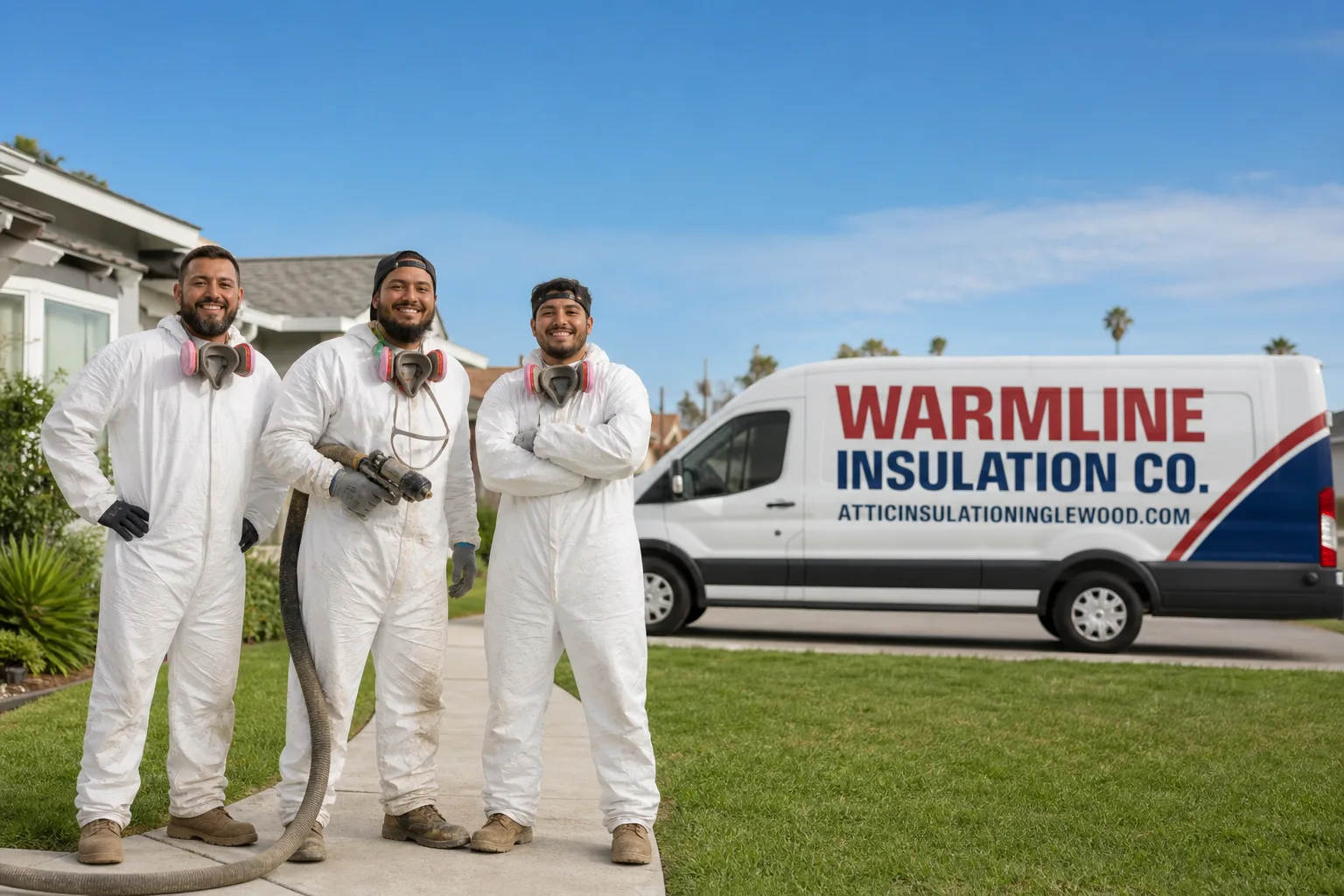
Fast, Reliable Crawl Space Encapsulation & Vapor Barrier Across Manhattan Beach
Crawl space encapsulation in Manhattan Beach typically runs $8,000 to $18,000 depending on square footage, pier count, and whether you need a dehumidifier added to the system. Most vapor barrier and encapsulation jobs are done in one visit, and our crews know the Sand Section, Tree Section, and Hill Section well enough to quote accurately over the phone. If you’re noticing a musty smell creeping up through your first-floor hardwood, or if your floors feel damp even in August, call (424) 622-5846. A live person answers 24/7, and we’ll get a background-checked, uniformed technician to your Manhattan Beach crawl space fast.
We’ve been doing this since 2011, and the homes here present a unique set of problems you won’t find in Torrance or Hawthorne. The marine layer keeps sub-floor humidity elevated nearly year-round, and the salt-laden air corrodes unsealed framing faster than most homeowners expect. That’s why vapor barrier integrity, not insulation R-value, is the conversation we lead with in Manhattan Beach.
Why Warmline Insulation Co. Is Manhattan Beach’s Preferred Crawl Space Encapsulation & Vapor Barrier Company
Manhattan Beach homeowners call us for one reason more than any other: we treat crawl space moisture as a coastal problem, not a generic one. The same vapor barrier approach that works fine 10 miles inland fails a block from the ocean. Salt air bypasses unsealed seams, humidity stays above 70% relative humidity even in January, and pier footings wick ground moisture through concrete. We’ve corrected dozens of jobs in Manhattan Beach where a contractor from inland simply rolled out a 6-mil sheet and walked away. Within two seasons, the rim joists were rotting where the barrier never got sealed around plumbing penetrations and pier footings. Our team spotlights those failure points because we’ve repaired enough of them.
Customers in the Sand Section, the Hill Section, and the Tree Section consistently mention two things in reviews: our technicians show up on time and they explain exactly what they’re seeing under the house before any work begins. That matters when you’re dealing with a 30-foot-wide lot where the crawl space access is buried under a deck or tucked street-side behind a retaining wall. We’ve worked those tight Manhattan Beach jobs enough times to anticipate the access problem before it becomes a change order. And because most crawl space encapsulation work in Manhattan Beach is completed in a single visit, you’re not dealing with multiple scheduling headaches or crews who don’t know the neighborhood.
Every job we do in Manhattan Beach is backed by our 90-Day Done Right Promise. If something isn’t right, we come back and fix it. Written, not implied. Neil Ashford built Warmline Insulation Co. on that guarantee, and it’s the same promise we make on a small vapor barrier repair in the Tree Section or a full encapsulation on a rebuilt three-story Sand Section custom.
Our Crawl Space Encapsulation & Vapor Barrier Services in Manhattan Beach
Crawl Space Vapor Barrier Installation & Replacement
A proper vapor barrier in Manhattan Beach starts with the right material thickness, and for homes within a few blocks of the ocean, that means 12-mil reinforced polyethylene minimum. We see 6-mil barriers constantly on Manhattan Beach homes, and they fail for a simple reason: during installation, the barrier gets punctured, and in a crawl space where the marine layer keeps humidity above 70% year-round, every puncture is a moisture highway. We also seal every seam with butyl tape or mastic, wrap each foundation pier, and mechanically fasten the barrier to the stem walls, not just the dirt. In Manhattan Beach’s sandy sub-floors, unsealed pier penetrations are the number one bypass point for salt-laden air.
Crawl Space Encapsulation
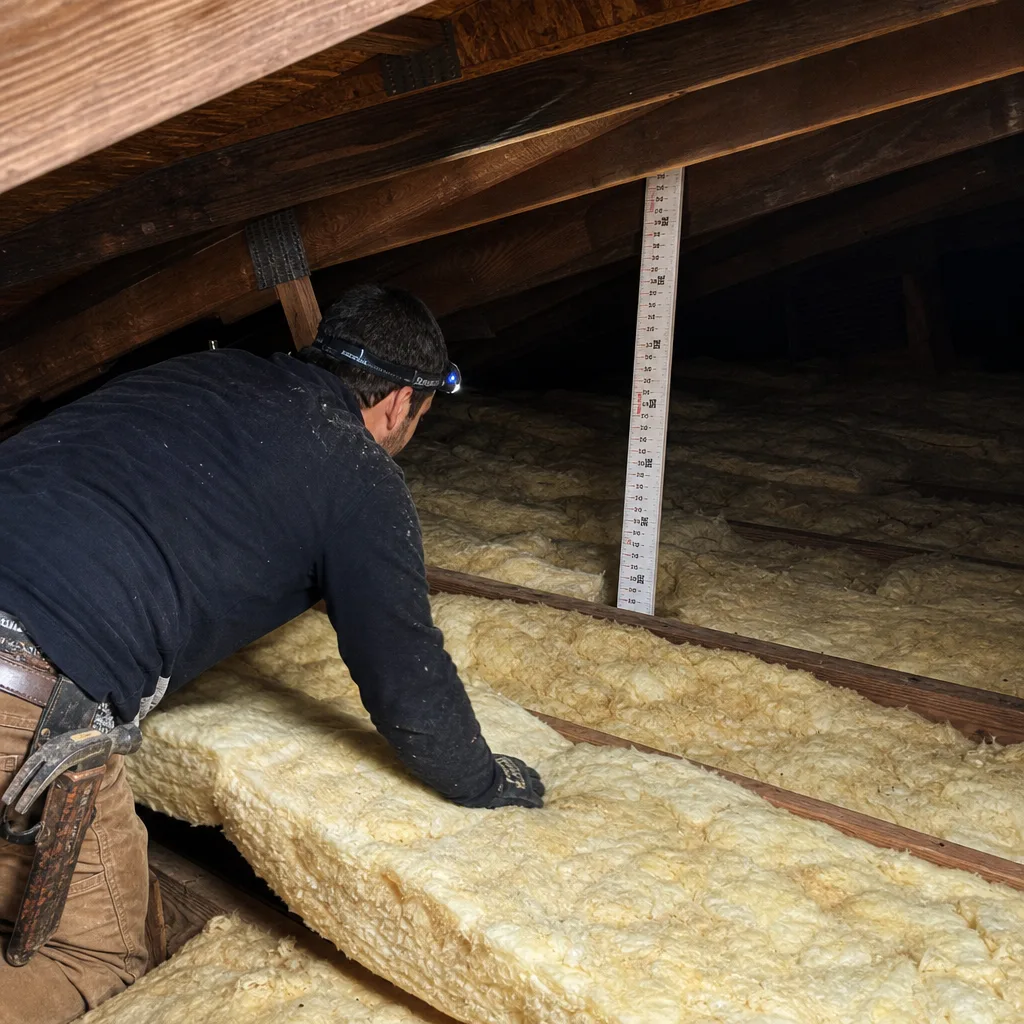
Full encapsulation goes beyond a vapor barrier: we seal the vents, wrap the piers, seal the rim joist band, and line the walls and floor with a continuous reinforced liner. On a Manhattan Beach Sand Section lot where the rebuilt custom home has no attic access, this is often the only moisture management system protecting the first-floor framing. Our Crawl Space Encapsulation & Vapor Barrier team in Manhattan Beach routinely works on homes where the vent configuration was designed for a 1950s beach bungalow but the structure is now a three-story custom with nowhere for moisture to go except up. Encapsulation closes that pathway at the source.
Crawl Space Insulation
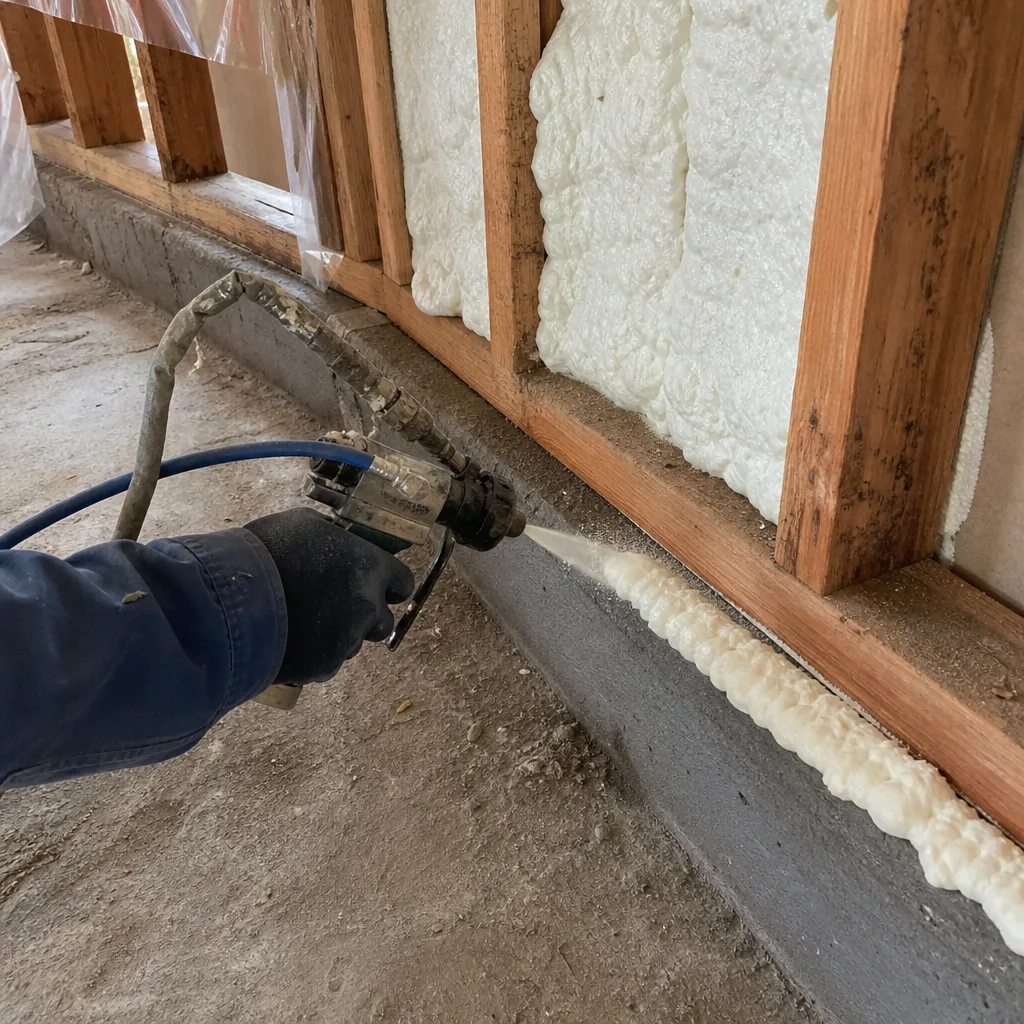
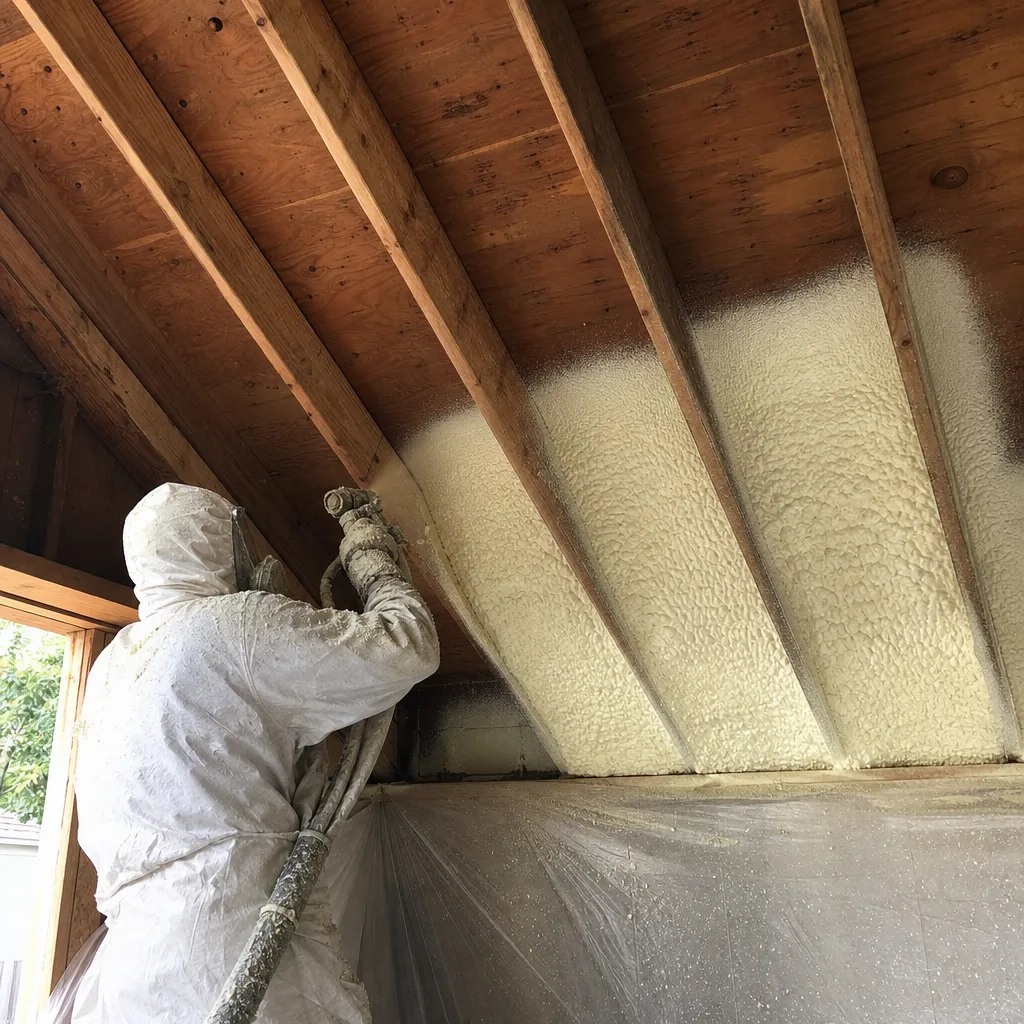
Insulation in a Manhattan Beach crawl space is secondary to moisture control, but it still matters for floor comfort and energy use. We install closed-cell spray foam against the rim joist band and, where appropriate, fiberglass batt insulation between floor joists, using materials from CertainTeed and Icynene. The difference in Manhattan Beach is that we won’t insulate until the vapor barrier is sealed and the relative humidity is under control. Insulating a damp crawl space in the Sand Section just traps moisture against the subfloor and accelerates rot. In coastal Manhattan Beach, the sequence matters more than the product.
Crawl Space Moisture Control and Dehumidification
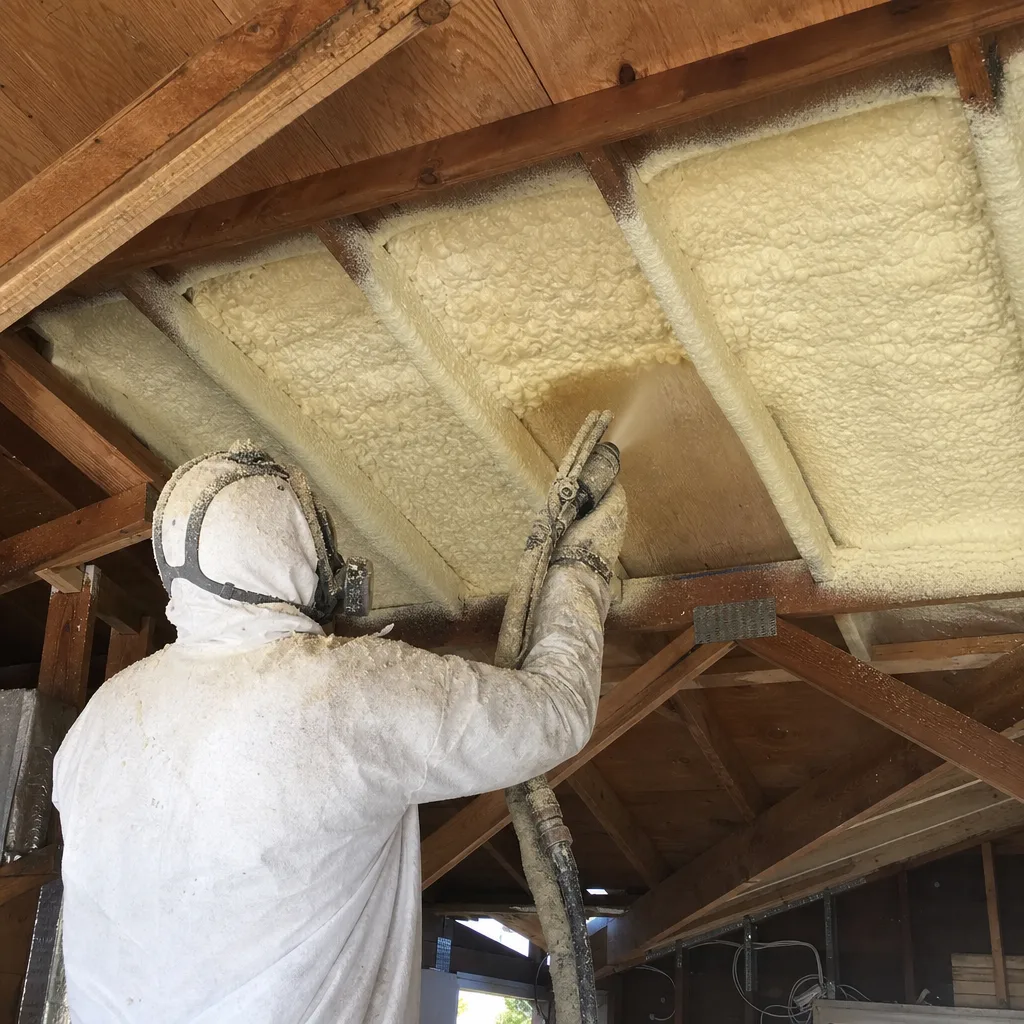
Even a fully sealed and encapsulated crawl space in Manhattan Beach can hold humidity above acceptable levels because the exterior air is perpetually damp. We install self-draining or condensate-pump dehumidifiers sized to the cubic footage of the space, and we tie them into a condensate line or sump pit so you’re not emptying a bucket every three days. On Sand Section lots where the crawl space is only 18 to 24 inches high, we use low-profile units that fit under the piers without losing airflow. A dehumidifier in Manhattan Beach isn’t optional in most ocean-adjacent crawl spaces; the marine layer simply keeps the sub-floor air too wet to self-correct.
What happens when you call
- 1
A real person answersNo phone trees - you reach a local pro.
- 2
You get an upfront price rangeHonest numbers before anyone is dispatched.
- 3
A background-checked tech heads outLicensed & insured, dispatched right away.
- 4
You approve before work beginsNothing starts until you say go.
Trusted Brands We Service in Manhattan Beach
We install and service crawl space moisture systems built on proven materials, not experimental products. You’ll see CertainTeed vapor barrier and membrane products on our trucks in Manhattan Beach, plus Icynene closed-cell foam for rim joist and wall sealing. When a Manhattan Beach customer asks why we don’t use the cheaper perforated barrier you find at big-box stores, the answer is simple: perforated products are built for conditioned crawl spaces, and most Manhattan Beach crawl spaces under the Sand Section are unvented and damp for most of the year. We stock the right materials local to our Los Angeles dispatch, so Manhattan Beach jobs don’t wait on parts.
Common Crawl Space Encapsulation & Vapor Barrier Problems We See in Manhattan Beach Homes
- Unsealed pier footings and plumbing penetrations: We regularly pull back vapor barriers on Manhattan Beach homes and find the barrier simply laid around piers and pipes, never sealed. Salt-laden air flows straight through those gaps. Within two seasons the rim joist behind that gap is soft to the touch, and the fix costs four times what the original barrier did.
- Perforated barriers on unvented crawl spaces: Perforated moisture barriers are meant for conditioned crawl spaces with mechanical ventilation. Manhattan Beach crawl spaces under 1950s bungalows and newer custom Sand Section builds are typically unvented, meaning a perforated product actively lets ground moisture through. We replace these constantly in the Tree Section and Hill Section.
- Street-side access hatches on narrow lots: On the original 30-foot-wide Sand Section lots, the building department often requires crawl space access from the street side. That means cutting a hatch through a finished first-floor closet or under a staircase. Contractors who don’t know Manhattan Beach’s building department requirements end up with a change order and a frustrated homeowner. We plan for that access configuration from the first inspection.
- Salt-air corrosion on unsealed ductwork and framing: Homes within half a mile of the water in Manhattan Beach get a fine layer of salt dust on everything in the crawl space. Bare copper, exposed nails, and unsealed ductwork corrode visibly faster than in El Segundo or Lawndale. Encapsulation slows that process by isolating the space from exterior air, but only if the barrier is truly sealed.
Pricing for Crawl Space Encapsulation & Vapor Barrier in Manhattan Beach, CA
Here are real numbers for the Manhattan Beach market. A crawl space vapor barrier replacement on a typical 1,200 to 1,800 square foot Manhattan Beach home runs $2,800 to $5,500. Full encapsulation with pier wrapping, vent sealing, rim joist treatment, and a 12-mil reinforced liner runs $8,000 to $14,000. Adding a self-draining dehumidifier sized for a Manhattan Beach crawl space adds $1,800 to $3,200 depending on capacity. Crawl space insulation installed after encapsulation runs $1,500 to $4,000. Tight Sand Section lots with low clearance and difficult access can add 15 to 20 percent to the base price because the crew works on their stomachs for most of the day. We offer upfront pricing with no surprise change orders, and most Manhattan Beach jobs are finished in a single visit. Call (424) 622-5846 for a free estimate; we’ll talk through your crawl space over the phone and, in most cases, quote it without stepping foot on the property.
Why Salt Air Forces a Different Approach in Manhattan Beach
Here’s what a block from the ocean actually means for your crawl space. Unlike neighboring Torrance or Hawthorne, Manhattan Beach’s Sand Section flat-roof custom homes often have no accessible attic at all, so there’s no attic ventilation path to dry the structure. All the moisture that would normally move up and out through a ventilated attic in a Torrance ranch gets pushed down and into the crawl space, where it collects against the subfloor and rim joist. The marine layer keeps exterior relative humidity elevated even on sunny days, and the salt in that air is hygroscopic, meaning it attracts and holds moisture against framing members. A standard inland encapsulation recipe fails here because it assumes vapor can dissipate. In Manhattan Beach, it can’t. The vapor barrier has to be the primary moisture control system, sealed with no gaps, and paired with mechanical dehumidification. That’s the technical reality behind every crawl space job we do in this city.
Our crew encapsulated a crawl space on a 30-foot-wide Sand Section lot where the homeowner’s rebuilt three-story custom had no attic access, so the only way to stop the salt-air moisture wicking up into the first-floor framing was to seal every pier and vent. We laid a 12-mil reinforced vapor barrier over the sandy soil, taped every seam, and wrapped the foundation piers, then installed a self-draining dehumidifier because the marine layer kept the space above 70% relative humidity even in January. The homeowner later told us the musty smell that had persisted for two years was gone the week we finished. That’s the job in Manhattan Beach: not an insulation upgrade, a moisture intervention.
We Also Serve Cities Near Manhattan Beach
Our Crawl Space Encapsulation & Vapor Barrier in Manhattan Beach crews work the same neighborhoods every week, and we extend that coverage to nearby Hermosa Beach, El Segundo, Lawndale, and Hawthorne. If you’re in one of those communities, the same 24/7 live answer, upfront pricing, and 90-Day Done Right Promise apply. We dispatch from our Los Angeles office, and a Manhattan Beach job is rarely more than a short drive away.
Serving Manhattan Beach, CA - Our Local Coverage Area
We’re based in the Manhattan Beach area and know this community well. Use the map below to see our service coverage - if you’re nearby, we can almost certainly help.
FAQs - Crawl Space Encapsulation & Vapor Barrier in Manhattan Beach
The musty smell almost always comes from humidity above 65% relative humidity, not standing water. In Manhattan Beach, the marine layer keeps crawl space air above 70% RH for most of the year, even if the visible soil looks dry. That level of moisture supports mold growth on the underside of your subfloor and on floor joists. The fix starts with a sealed vapor barrier and, in most ocean-adjacent Manhattan Beach crawl spaces, a dehumidifier sized to the space. Call (424) 622-5846 and we’ll help you figure out whether a barrier alone will do it or you need mechanical drying.
Yes, and it’s a real distinction. Sand Section homes are typically on original 30-foot-wide lots with low crawl space clearance, street-side access hatches, and rebuilt structures with no attic ventilation path, so the crawl space carries the entire moisture load. Tree Section homes are more often mid-century ranch or traditional builds with taller crawl spaces and standard access. The Sand Section job takes longer, often requires low-profile dehumidifiers, and demands more attention to pier wrapping because the footings run closer to the water table. A Tree Section home may not need a dehumidifier at all. A Sand Section home almost always does.
For homes more than a few blocks from the water, a properly sealed vapor barrier often solves the smell on its own. For Manhattan Beach homes within roughly half a mile of the ocean, particularly in the Sand Section, a dehumidifier is almost always part of the correct fix because the exterior air itself is too humid to dry the space, even after sealing. We’ll tell you honestly which scenario you’re in after inspecting the space, and you’ll get a quote for both options before any work starts.
Flat-roof custom builds in the Sand Section typically have no accessible attic, which means the natural upward drying path that a traditional vented attic provides doesn’t exist. All the moisture generated inside the home, plus the moisture coming up from the sandy soil, gets trapped in the lower portion of the structure unless the crawl space is fully encapsulated and mechanically dried. We’ve seen first-floor hardwood cupping and rim joist rot on Manhattan Beach custom homes where the crawl space was overlooked during the rebuild. The encapsulation has to be part of the home’s overall moisture strategy, not an afterthought.
Six-mil polyethylene is the minimum for inland conditioned crawl spaces, but for Manhattan Beach homes within a few blocks of the ocean, we recommend 12-mil reinforced polyethylene at minimum. The marine environment punctures thinner material during installation and over time, and every puncture becomes a moisture entry point in a space that’s already humid year-round. We install 12-mil reinforced barrier with sealed seams and mechanically fastened edges on nearly every ocean-adjacent Manhattan Beach job. Call (424) 622-5846 for a free estimate and we’ll tell you exactly what your crawl space needs.
Contact Warmline Insulation Co. in Manhattan Beach
If your Manhattan Beach crawl space smells damp, your floors feel cool and clammy, or you just bought a place and want to know what’s actually under the house, call (424) 622-5846. A live person answers around the clock, not a voicemail or an answering service. We’ll schedule a crawl space inspection at your convenience, quote the work upfront, and most jobs are finished in a single visit. We’re licensed and insured, every technician is background-checked and uniformed, and we stand behind every Manhattan Beach job with our 90-Day Done Right Promise. Ask about the $50 Off Any Repair Over $250 and our permanent 5% Senior & Veteran discount when you call.
Written by Neil Ashford, Owner at Warmline Insulation Co., serving Manhattan Beach crawl space encapsulation and vapor barrier projects since 2011.